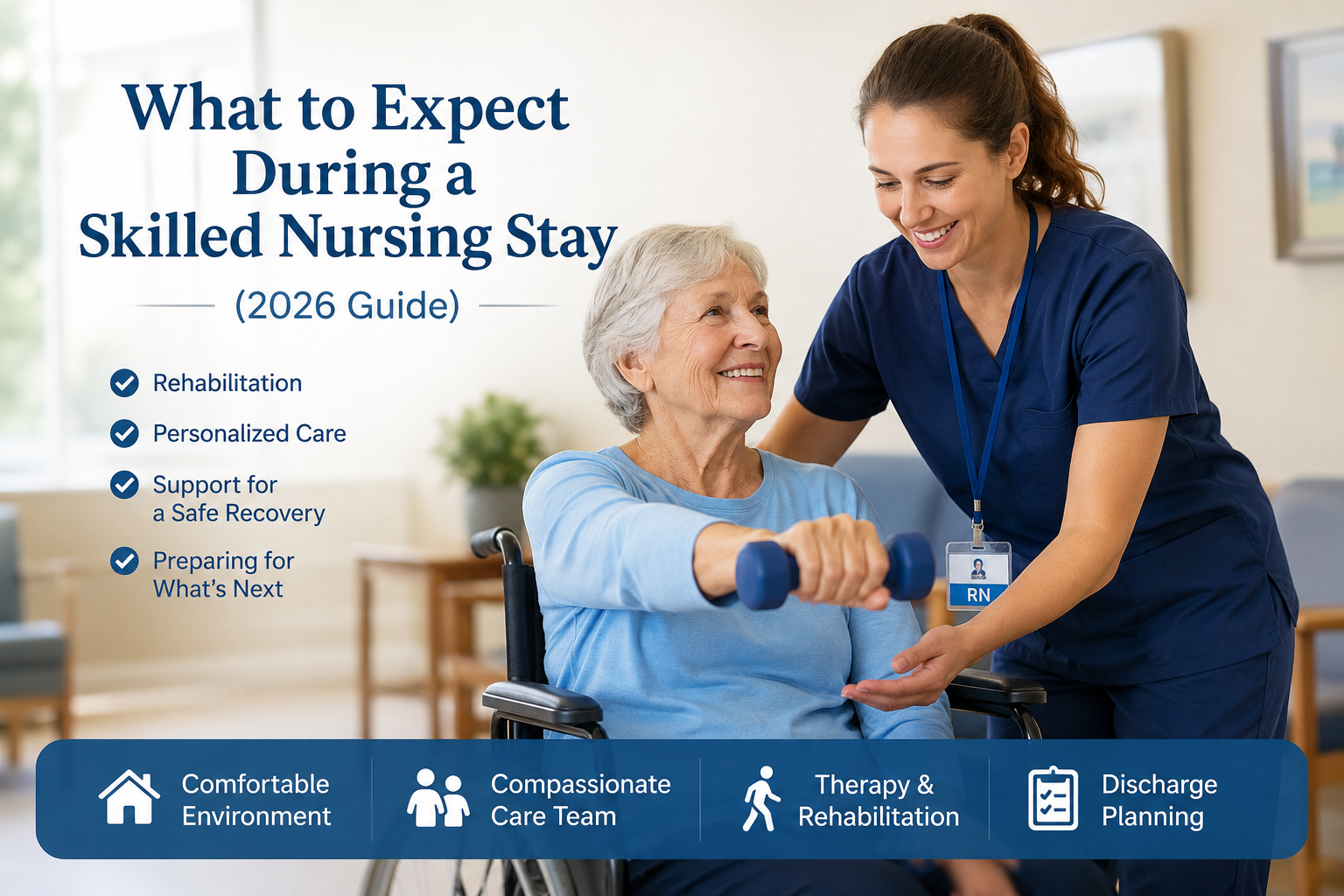
What to Expect During a Skilled Nursing Stay (2026 Guide)
If you’re reading this, chances are a hospital discharge planner just handed your family a list of facilities and told you to choose one — fast. You’re scared, confused, and overwhelmed. Understanding what to expect during a skilled nursing stay can help you make better decisions during one of the most stressful transitions your family will face.
As a registered nurse with over 30 years of experience, a PhD in Clinical Psychology, and someone who has worked closely with skilled nursing facilities for over a decade, I’m going to pull back the curtain and tell you exactly what happens — the good, the bad, and the traps you need to avoid.
What Is a Skilled Nursing Facility?
A skilled nursing facility — often called a SNF — provides short-term medical and rehabilitation care after an illness, surgery, injury, or hospitalization. A person may go to skilled nursing after a stroke, a hip fracture, a serious infection, heart surgery, a fall with injury, or a period of severe weakness.
The goal is usually to help the patient recover enough to return home safely or to determine the next appropriate level of care. Services may include nursing care, physical therapy, occupational therapy, speech therapy, wound care, medication management, IV therapy, and assistance with daily activities.
Here is something many families don’t understand: a skilled nursing stay is not the same as long-term nursing home care. Skilled nursing is focused on short-term recovery and rehabilitation. It is meant to be a bridge between the hospital and home not a destination.
The Three-Day Rule and the Observation Trap
The biggest shock for families usually happens before they even leave the hospital. If your loved one has traditional Medicare, they generally must have a medically necessary three-consecutive-day inpatient hospital stay before Medicare will cover a skilled nursing facility stay. The discharge day does not count toward those three days.
Here’s the trap: observation status.
Your loved one can be in a hospital bed for four days receiving tests, medications, meals, nursing care, and therapy evaluations but if the hospital classified them as “observation” rather than “inpatient,” Medicare considers that outpatient care. Those days do not count toward the three-day inpatient requirement. When it’s time for discharge to skilled nursing, the family is told Medicare won’t cover it.
This happens far more often than families realize, and the frustration is devastating. Your parent was in a hospital bed for days. They had IVs, nurses, doctors making rounds. Everything looked like an inpatient stay. But a classification decision made behind the scenes one the family was never consulted about can cost thousands of dollars.
What to do: The moment your loved one is hospitalized, ask the case manager or attending physician directly: “Is my parent admitted as an inpatient, or are they under observation status?” Do not wait until discharge day to ask this question. By then, your options may be severely limited. If they are on observation status and you believe they should be inpatient, advocate immediately with the attending physician. You also have the right to appeal observation status decisions.
Choosing a Facility Under Pressure
Hospital discharge planners may give you a list of 20 facilities and tell you that you have two hours to decide. This feels like being thrown into deep water without a life jacket and it’s one of the worst ways to make such an important decision.
If at all possible, try to buy yourself time. Ask the discharge planner: “Can we have 24 hours to research these options?” Even one extra day can make a difference.
Before choosing, check Medicare’s Care Compare tool at medicare.gov/care-compare for star ratings but don’t stop there. Ratings are helpful, but they don’t tell the whole story. If you can, visit the facility. Walk the halls. Look at how staff interact with residents. Check for cleanliness. Notice the smell. A persistent odor of urine or heavy air freshener masking unpleasant smells tells you more than any rating system.
The real test: visit the facility at 6pm on a Tuesday evening, not during a scheduled tour. If call lights are ringing with no staff in sight and the hallway smells, the five-star rating on the website doesn’t matter. Trust your gut.
Ask about staffing ratios, therapy schedules, how family updates are handled, whether the facility accepts your loved one’s insurance, and what happens when skilled coverage ends.
The First Few Days.What to Expect
The first few days in a skilled nursing facility are usually an adjustment period and they can be rough.
The facility will review hospital records, medications, diagnoses, therapy needs, diet orders, fall risk, skin condition, and safety concerns. Nurses and therapists will evaluate what the patient can and cannot do.
Families may notice that their loved one is more tired, confused, emotional, or weaker than expected. This is common after hospitalization, surgery, infection, anesthesia, pain medication, sleep deprivation, and a major change in environment.
From a clinical psychology perspective, this transition is a significant “loss of self” event. Your loved one is no longer the gardener, the teacher, the grandmother who makes Sunday dinner. In the facility, they become “the hip in Room 202.” Within 48 hours, many seniors experience increased confusion or agitation. This isn’t always dementia. It’s often delirium caused by the sudden change in environment, disrupted sleep, unfamiliar faces, and loss of routine.
Families can help by bringing familiar items: glasses, hearing aids, dentures, comfortable clothing, family photos, a favorite blanket, a phone charger, a calendar, and a written list of preferences and routines. These anchors of familiarity can reduce anxiety and confusion significantly.
Rehab — Expectations vs Reality
Many families hear the word “rehab” and envision something like a sports medicine clinic or a wellness center. The reality is different.
A skilled nursing facility is a nursing home that has a wing or program dedicated to short-term recovery. It is a busy, clinical environment with shared rooms, institutional meals, and a lot of waiting between therapy sessions.
Rehab typically means one to two hours of physical therapy, occupational therapy, or speech therapy per day. The other 22 hours are spent in a hospital bed, a wheelchair, or a common area. If you expect round-the-clock stimulation and activity, you will be disappointed.
Progress is not always fast or steady. A patient may do well one day and struggle the next. Some patients participate eagerly. Others are limited by pain, fatigue, confusion, shortness of breath, weakness, depression, or fear of falling.
Success in a skilled nursing facility depends heavily on the patient’s participation. If your loved one is too depressed, confused, or resistant to engage in therapy, the facility may begin talking about discharge for “failure to progress.” This is one of the most frustrating situations families face. Your parent needs the rehab, but they can’t or won’t participate, and the system responds by sending them home.
Families should ask the therapy team early and often: What are the therapy goals? How often will therapy be provided? What does my parent need to accomplish before going home safely? Is my parent participating? What barriers are slowing progress? What equipment may be needed at home?
A skilled nursing stay should have measurable goals — walking a certain distance safely, transferring from bed to chair without assistance, climbing steps, dressing independently, swallowing safely, or managing basic daily activities.
The Day 20 Cliff — The Biggest Financial Surprise
This is one of the most important things families need to understand about what to expect during a skilled nursing stay — and the one that catches almost everyone off guard.
Under Medicare Part A, if your loved one qualifies for skilled nursing coverage, Medicare pays 100% for days 1 through 20. No copay. No cost to the family.
Starting on day 21, the family pays a daily coinsurance of $217 per day in 2026 — that’s roughly $6,500 per month suddenly appearing on your bill. Medicare continues to cover the rest through day 100, but only as long as skilled care is still needed.
After day 100, Medicare pays nothing. The family is responsible for 100% of the cost which can be $7,000 to $10,000 or more per month depending on the facility.
Here’s what families need to watch for: don’t be surprised if the facility suddenly decides your loved one is “ready for home” right around the time the copay kicks in. It may be a legitimate clinical decision or it may be financially motivated. This is why attending care conferences and understanding the therapy goals is so important. You need to know whether a discharge recommendation is based on your parent’s actual progress or the facility’s financial calculations.
If you have a Medicare supplement (Medigap) plan, it may cover the daily coinsurance for days 21 through 100. Check your policy now not on day 21.
If your loved one has a Medicare Advantage plan, the rules may be different. Advantage plans may have different copay structures, prior authorization requirements, network restrictions, and day limits. Contact the plan directly to understand exactly what is covered and for how long.
The Notice of Non-Coverage — Your Right to Appeal
At some point during the stay, the facility may hand you a “Notice of Non-Coverage” a document stating that Medicare-covered skilled services are ending. This can feel like a door slamming shut.
But it’s not. You have the right to appeal.
On the back of that notice are instructions for filing an expedited appeal. Follow them immediately. Filing an appeal buys your loved one additional time in the facility while an independent reviewer evaluates whether skilled care is still medically necessary. This review is done by an outside organization not the facility and not Medicare so it’s a genuinely independent assessment.
Many families don’t know about this right, and they accept the discharge without question. Don’t. If you believe your loved one still needs skilled care, exercise your right to appeal. The worst that happens is the appeal is denied and you proceed with discharge as planned. But I’ve seen appeals succeed when the clinical documentation supported continued need.
How to Advocate for Your Loved One
In a facility where one nurse may be responsible for 20 to 30 patients, the families who speak up respectfully and consistently get the best care for their loved one. Here’s how to advocate effectively:
Attend the care plan meeting. Within the first week or two, the facility must hold a care conference with the family. This is your most powerful tool. Ask for the baseline care plan. Understand the goals. Ask questions. Take notes.
Check the medication list. Skilled nursing facilities sometimes add medications that weren’t part of the original treatment plan. Watch particularly for sedatives being used to manage behaviors like wandering, agitation, or calling out. These “chemical restraints” may make the staff’s job easier but can significantly impair your loved one’s recovery and cognitive function. If you notice your parent is suddenly much more sedated than usual, ask why.
Visit at different times. Don’t just visit during the afternoon. Stop by in the morning, during a meal, or in the evening. This gives you a fuller picture of the care being provided.
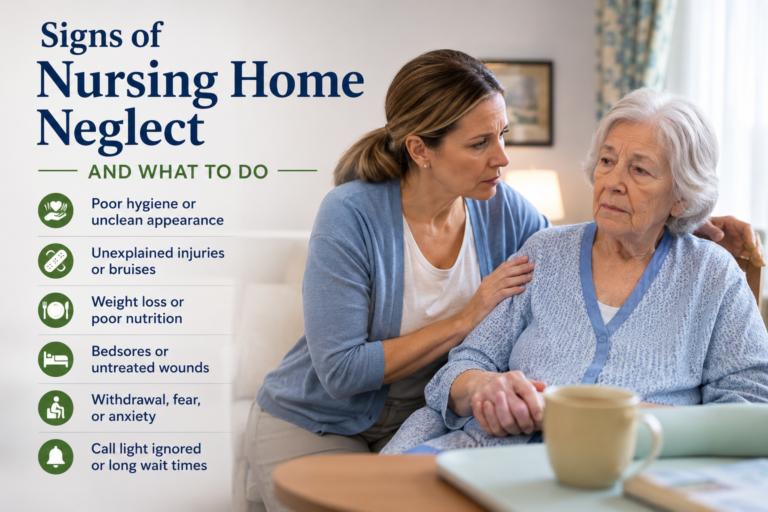
Pay attention to the details. Is your loved one getting out of bed regularly? Are they eating and drinking enough? Are medications being given on time? Is pain being managed? Are therapy sessions actually happening? Are call lights being answered promptly? Is skin being checked for redness or breakdown? Are wounds improving or getting worse? Is confusion getting better or worse?
Keep a simple notebook. Write down what you observe during each visit — dates, times, concerns, and who you spoke with. If a problem arises, your notes become invaluable documentation.
If something seems wrong, escalate. Start with the nurse assigned to your parent. If the issue isn’t resolved, ask for the charge nurse, the director of nursing, the social worker, or the administrator. Be respectful but persistent. Your loved one cannot always advocate for themselves — they need you to be their voice.
The Emotional Toll on Everyone
A skilled nursing stay affects the entire family not just the patient.
Your loved one may feel helpless, embarrassed, angry, frightened, or depressed. They may worry they’ll never go home. They may refuse to participate in therapy because they feel defeated. They may lash out at the people closest to them which is usually the family.
Family members often experience their own emotional turmoil. Guilt about not being able to care for their parent at home. Anxiety about whether they chose the right facility. Frustration with the system, the insurance company, and the pace of recovery. Conflict between siblings about what’s best. Exhaustion from juggling hospital visits, work, their own family, and the weight of medical decisions.
From a clinical psychology perspective, all of these feelings are completely normal. Recovery is not only physical. It is emotional, psychological, and practical.
Avoid making promises you can’t guarantee, like “You’ll definitely be home by Friday.” Instead, offer honest reassurance: “We’re working with the therapy and nursing team to make sure you’re safe and ready. We’re here with you through this.”
Give yourself permission to take a break. You cannot pour from an empty cup. If you’re running yourself into the ground visiting every day for hours, you will burn out and your loved one needs you to be present and strong for the decisions ahead.
Preparing for Discharge. Don’t Wait Until the Last Day
Discharge planning should begin within the first week not on the day they tell you it’s time to leave. Families who wait until the last minute end up scrambling and making decisions out of panic rather than preparation.
Before your loved one leaves skilled nursing, make sure you understand: their current medication list with clear instructions, all follow-up appointments with dates and locations, therapy recommendations for continuing rehab at home, equipment needs such as a walker, wheelchair, shower chair, hospital bed, or grab bars, home safety concerns like rugs, stairs, bathroom access, and lighting, diet instructions especially for diabetes, heart failure, or swallowing difficulties, wound care instructions if applicable, fall precautions, bathing and toileting needs and how much help will be required, whether home health services have been ordered, whether a private caregiver is needed, and what symptoms should prompt a call to the doctor or 911.
Many families underestimate how much help their loved one will still need at home. A person may be able to walk 50 feet in the therapy gym with a physical therapist standing right beside them but that doesn’t mean they’re safe walking to the bathroom alone at 2am. A home discharge plan must reflect real life, not just therapy performance inside the controlled environment of a facility.
When Home May Not Be Safe
Sometimes families want their loved one home, but the honest truth is that home isn’t safe yet or may not be safe anymore.
Warning signs include frequent falls, severe weakness, persistent confusion, inability to transfer safely, medication errors, no available caregiver at home, unsafe stairs or bathroom access, or worsening medical conditions that need ongoing monitoring.
In these situations, families may need to consider other options: home health care with skilled nursing and therapy visits, private-duty caregivers for extended hours of support, assisted living for those who need daily help but not 24-hour medical care, memory care for those with significant cognitive decline, or long-term nursing care for those with complex, ongoing medical needs.
Choosing a different path than “home” doesn’t mean the family has failed. It means your loved one’s needs have changed and you’re making the responsible decision to match the care to those needs.
Quality Differences Between Facilities. They’re Real
Not all skilled nursing facilities provide the same quality of care. The differences can be dramatic, and they directly affect your loved one’s recovery and safety.
Before choosing a facility, consider: Medicare star ratings on Care Compare at medicare.gov, staffing levels and nurse-to-patient ratios, therapy availability and how many hours per day are provided, cleanliness and general condition of the building, responsiveness of staff to call lights and requests, how family updates and communication are handled, wound care capability and experience, dementia care experience, distance from family so visits are practical, whether the facility accepts your loved one’s insurance, and availability of private or semi-private rooms.
If you have the luxury of even a few hours before choosing, call two or three facilities on the list. Ask about their therapy program, staffing, and how they communicate with families. The ones that take time to answer your questions thoughtfully are usually the ones that take time with their residents too.
A Skilled Nursing Stay Is a Bridge. Not a Destination
The goal of a skilled nursing stay is to get in, get the maximum therapy and recovery possible, and get out safely either back home or to the most appropriate next level of care.
With the right information, the right questions, and the right advocacy, families can navigate this stressful transition and help their loved one get the best possible outcome.
Most importantly, remember that you are not powerless in this process. You have the right to ask questions. You have the right to attend care conferences. You have the right to appeal coverage decisions. You have the right to visit any time. And you have the right to speak up when something doesn’t seem right.
Your loved one needs your presence, your patience, and your voice. That’s the most important thing you can bring to a skilled nursing stay.
Need Help Navigating a Skilled Nursing Stay in Texas?
If your family is facing a hospital discharge and you’re not sure what to expect during a skilled nursing stay or what comes after — RightCareFinder can help. A registered nurse personally reviews your situation and helps you find the right facility or the right next step, whether that’s skilled nursing, home health, assisted living, or another level of care.
Our service is completely free for families. Get nurse-guided help at RightCareFinder.com or click Get Free Help Now.
This article is for informational purposes only and does not constitute medical, financial, or legal advice. Medicare coverage rules can change. Always verify current information directly with Medicare at 1-800-MEDICARE (1-800-633-4227) or at medicare.gov. For 2026 specific costs, refer to the most recent CMS announcements.