Signs of Nursing Home Neglect and What to Do (2026 Guide)
Nursing home neglect is not always a loud, visible trauma. More often, it is a quiet, eroding silence. The steady decline of a human being whose basic needs have become inconveniences to a short-staffed facility.
As a registered nurse with over 30 years of clinical experience and a PhD in Clinical Psychology, I have spent more than a decade working inside the senior care system. I have seen the difference between the natural frailty of aging and the preventable damage of a failing system. If you are reading this, your gut is likely already telling you something is wrong. Trust it.
This guide will help you recognize the real signs of nursing home neglect, understand the difference between normal decline and unacceptable care, document what you see effectively, respond to the excuses facilities give, and take action to protect your loved one.
What Is Nursing Home Neglect?
Nursing home neglect occurs when a resident does not receive the care, supervision, nutrition, hygiene, medication support, or protection they need to remain safe and as healthy as possible. Neglect may be intentional, but more often it happens because of poor staffing, inadequate training, weak supervision, poor communication, or a facility culture that does not prioritize residents.
Neglect is different from a medical condition getting worse despite proper care. Older adults can decline even with excellent care. But when a resident’s needs are ignored, delayed, minimized, or repeatedly mishandled, families must take it seriously.
You do not have to prove neglect before you ask questions, document concerns, or report unsafe care. Asking questions is not being difficult. It is protecting someone who may not be able to protect themselves.
Recognizing Nursing Home Neglect. The Physical Signs
In my experience, nursing home neglect manifests in three primary areas: the body, the behavior, and the surroundings.
Signs on the Body
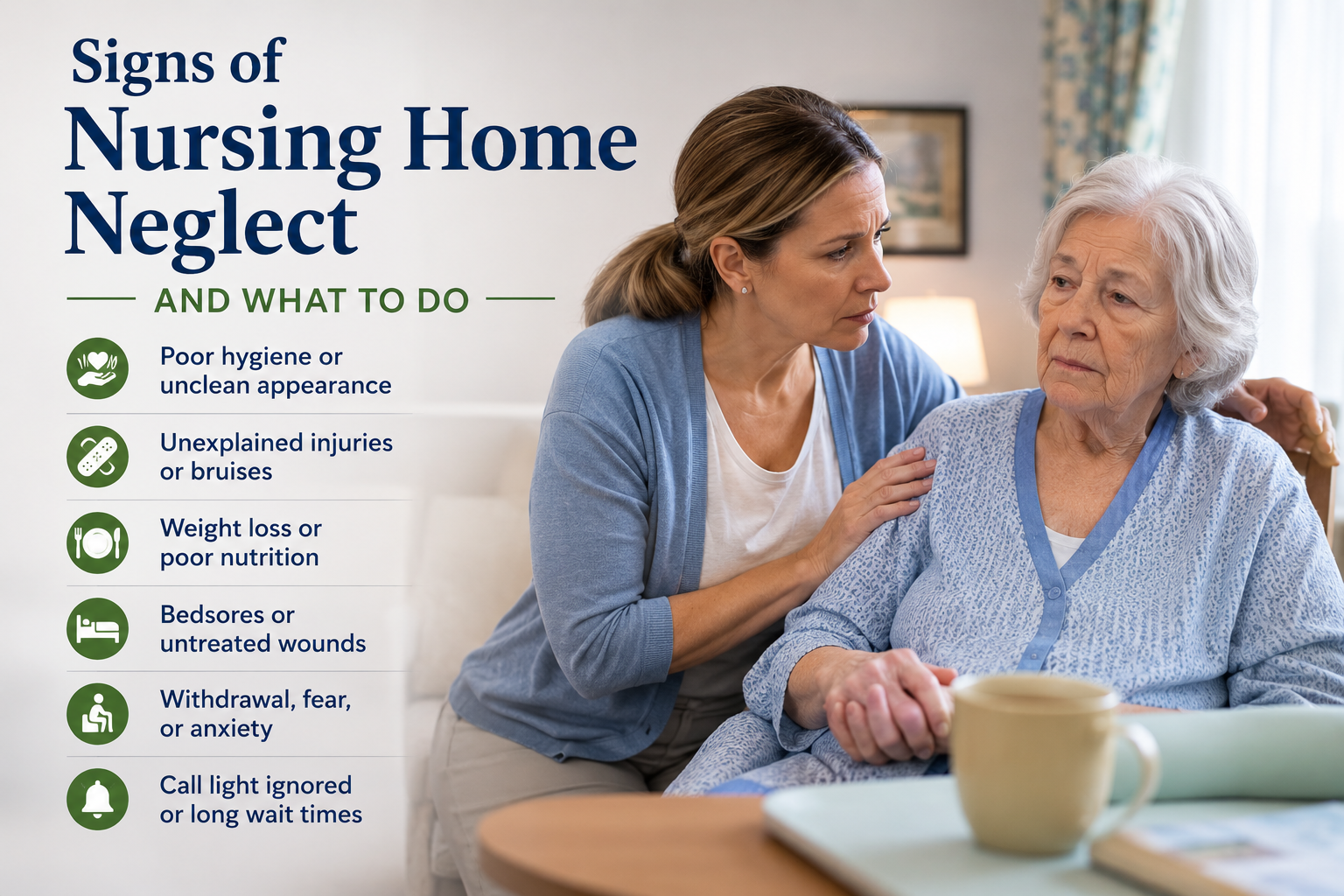
Chronic dehydration. Persistent dry mouth, recurring urinary tract infections, dark urine, or confusion are not just “part of getting old.” They are often signs that water is not being offered frequently enough or that a resident can no longer reach their cup and nobody is helping them.
Pressure injuries. A red spot on the tailbone, heels, or hips that doesn’t go away when pressure is removed is a clinical emergency in the making. It means your loved one has not been turned or repositioned frequently enough. Bedsores and severe pressure injuries are never a normal part of aging or dementia. They are failures of nursing intervention — preventable with proper care.
Unexplained weight loss. It’s easy for a facility to say “they just aren’t eating.” But the question is why. Is the food being placed out of reach? Is the resident too depressed to eat because they haven’t been out of bed in three days? Do they need help opening containers, cutting food, or being guided to eat? Does the resident need a swallowing evaluation, dental care, or adaptive utensils? Weight loss demands investigation, not a shrug.
Unexplained bruises, cuts, or injuries. Older adults do bruise easily, especially on blood thinners or with fragile skin. But families should be concerned when injuries are unexplained, repeated, located in unusual areas like the inner arms or thighs, or when staff cannot clearly explain what happened and when.
Poor hygiene. Your loved one smells of urine, has dirty or matted hair, untrimmed nails, food on clothing, or is wearing the same clothes repeatedly. Their bedding may be soiled or their room has strong persistent odors. Occasional accidents happen with frail residents, but a pattern of poor hygiene means staff are not providing adequate personal care.
Frequent falls without meaningful intervention. Falls happen with elderly residents. But repeated falls without an updated care plan, a therapy referral, a medication review, or environmental safety changes indicate that the facility is documenting falls without actually trying to prevent them.
Signs in Their Behavior
This is where my clinical psychology training adds a critical layer that most families and even many nurses miss.
Learned helplessness. When a resident stops asking for water, stops pressing the call bell, or becomes “unusually compliant” and withdrawn, they have often unconsciously realized that their needs will not be met no matter what they do. This is not “settling in.” It is not “adjusting.” It is a psychological survival mechanism that develops in a neglectful environment. The person has given up trying because trying never works.
Emotional withdrawal or sudden behavior changes. Your loved one becomes quiet, fearful, tearful, unusually anxious, angry, or reluctant to speak when staff are nearby. They may flinch when touched. They may say things like “Please don’t leave” when you visit. These changes should never be dismissed as just part of dementia or aging.
Fear of specific staff members. If your loved one becomes visibly distressed around certain caregivers, pay very close attention. They may not be able to articulate what’s wrong, especially if they have dementia, but their emotional response is telling you something important.
Saying “no one comes when I call.” When a resident repeatedly tells you this, believe them. A single delayed response can happen in any busy facility. But a pattern of ignored call lights leads to falls, incontinence, skin breakdown, uncontrolled pain, fear, and a devastating loss of dignity.
Signs in Their Surroundings
Dirty room conditions. Spills on the floor, soiled linens, overflowing trash, strong odors, cluttered walkways, or a bathroom that hasn’t been cleaned.
Safety hazards. Bed too high, wheelchair improperly positioned, call light on the floor or out of reach, water out of reach, mobility devices stored across the room where the resident can’t access them.
Missing personal items. When glasses, dentures, hearing aids, clothing, or assistive devices are constantly “lost,” the resident is being functionally blinded, silenced, and isolated. A person who can’t see, hear, or chew is a person who becomes invisible to staff and that invisibility is a form of neglect.
Common Excuses Facilities Give and Why They Don’t Hold Up
When you raise concerns, you will likely hear a standard script designed to minimize liability and end the conversation. Here are the most common excuses and the truth behind them:
“We’re short-staffed today.” Staffing levels are a management responsibility, not an act of nature. Chronic understaffing is a failure of the facility’s duty of care. If they cannot staff adequately to meet residents’ needs, they should not be accepting those residents.
“She refuses care.” Under federal law, when a resident refuses care, the facility must try different approaches. Different timing, different staff, different methods, or a behavioral health consultation. They cannot simply document “patient refused” and walk away. Refusal requires clinical intervention, not abandonment.
“That’s normal at his age.” Bedsores are not normal. Severe dehydration is not normal. Rapid weight loss is not normal. These are failures of care, not inevitable consequences of aging.
“He falls because he doesn’t listen.” Blaming the resident for falling is never acceptable. The facility is responsible for assessing fall risk, implementing prevention strategies, and adjusting the care plan when falls occur. A resident with dementia who keeps getting up unsafely needs a better intervention — not blame.
“She has dementia, so she says things that aren’t true.” Dementia can affect memory and perception. But dismissing everything a resident says because of their diagnosis is dangerous. If your loved one says they’re being ignored, hurt, or frightened, investigate. Don’t let the facility use their diagnosis as a shield.
“That bruise was probably from therapy.” Therapy can occasionally cause minor bruising in frail patients. But this explanation should come with specific details — what happened, when, and documentation in the medical record. A vague “probably from therapy” is not an adequate answer.
Some of these explanations may contain partial truth. But they should never end the conversation. The facility still has a legal and ethical duty to assess, document, create a care plan, notify the physician, and protect the resident’s safety and dignity.
How to Tell the Difference Between Normal Decline and Neglect
This is one of the hardest questions families face, and the answer requires honest assessment.
A loved one may decline because of dementia, stroke, advanced illness, infection, heart disease, or the natural progression of disease. Not every decline means nursing home neglect.
However, a decline becomes more concerning when the change is sudden and not adequately explained, staff give vague or inconsistent answers about what happened, the same problem keeps recurring without meaningful intervention, the family is not notified about injuries or significant changes, basic needs like food, water, hygiene, toileting, and medication are consistently not being met, the resident appears afraid or repeatedly says they are being ignored, care plans are not updated after falls, wounds, weight loss, or behavior changes, and staff blame the resident instead of addressing the underlying risk.
The key question is not just “what happened?” but “what did the facility do about it?” A responsible facility will assess the situation, notify the physician and family, document what occurred, update the care plan, and implement interventions to prevent it from happening again. If the facility minimizes, deflects, or provides no follow-up, that is a warning sign.
How to Document Like a Professional
If you are going to hold a facility accountable, you need more than emotions. You need a paper trail that a state surveyor, an ombudsman, or an attorney cannot ignore.
Keep a written log. Record the date, time, and exactly what you observed. Note the names and titles of staff you spoke with and what they said. Record whether the physician was notified and whether an incident report was completed.
Use objective language. Instead of writing “They are neglecting my mother,” write: “On May 14 at 6:30pm, I found my mother in wet clothing. Her call light was on the floor, out of reach. Staff could not tell me when she was last changed or repositioned.” Objective, factual notes carry far more weight than emotional statements.
Take photos. Photograph skin tears, bruises, pressure injuries, dirty linens, unsafe conditions, or anything concerning. Place a coin or ruler in the photo to show scale especially for wounds. Date every photo.
Time the call light response. Sit in the room and press the call bell. Write down when you pressed it and when staff arrived. If it takes 30 or 40 minutes for someone to respond to a toileting request, that’s documented evidence of inadequate staffing or attention.
Check for missing items. Keep an inventory of your loved one’s glasses, dentures, hearing aids, clothing, and personal belongings. When items disappear, document it.
Request copies. Ask for the current care plan, medication list, incident reports, and any documentation related to falls, wounds, or significant changes. You have the right to this information.
Recognizing Nursing Home Neglect. The Physical Signs
What to Do If You Suspect Nursing Home Neglect
If your loved one is in immediate danger. A serious injury, suspected abuse, difficulty breathing, unresponsiveness, or any medical emergency. Call 911. Do not ask permission from the facility. Have your loved one transported to an emergency room. The ER records will provide objective medical evidence of the condition.
For serious but non-emergency concerns, start by speaking with the nurse or charge nurse directly. Ask specific questions: What happened? When? Who was involved? Was the physician notified? What is being done to prevent it from happening again?
If you are not satisfied with the response, escalate to the director of nursing, the administrator, the social worker, or the attending physician. Request a formal care plan meeting. You have the right to one.
You can say: “I am concerned that my loved one’s care needs are not being met. I want a care plan meeting and a written explanation of what interventions are being put in place.”
If the facility does not address your concerns adequately, it’s time to go outside the building.
Who to Report to in Texas
Families in Texas have specific agencies and advocates available to them:
Texas Health and Human Services Complaint and Incident Intake. Call 1-800-458-9858 to report complaints about care or treatment in a nursing facility. This can trigger an unannounced state survey — an inspection the facility doesn’t know is coming.
The Texas Long-Term Care Ombudsman Program. Ombudsmen are free, independent advocates for nursing home residents. They do not work for the facility — they work for your loved one. They investigate complaints, help resolve problems, and protect residents’ rights. Contact your local ombudsman through the Texas HHS website.
The Texas Abuse Hotline. For suspected abuse, neglect, or exploitation of an adult age 65 or older, you can report online or by phone. Online reports are for situations that do not require immediate investigation.
For Medicare-certified nursing homes, complaints can also be filed through the State Survey Agency, which investigates quality-of-care complaints in facilities receiving federal funds.
You do not have to choose just one of these options. You can report to multiple agencies simultaneously.
The Advocacy Mindset. You Are Not Being Difficult
Many families hesitate to speak up because they don’t want to be labeled “difficult” or fear the staff will treat their loved one worse in retaliation. These fears are understandable but should not paralyze you.
You are not a difficult family member. You are a supervisor of the care you are paying for. Your loved one is a human being with legal rights, and you are their advocate.
When you bring a concern to a facility, be respectful but clear and direct. You can be kind and still be firm. Document everything. Follow up. And if the concern is serious, don’t hesitate to go above the facility to the state agencies that exist specifically to protect residents.
Showing up at unexpected times — an evening visit, a weekend morning, a random Tuesday at 6pm — tells the facility that someone is watching. Nursing home neglect thrives in the dark. Your presence brings light.
When Nursing Home Neglect Means It’s Time to Move
If a facility has lost your trust, they rarely earn it back. If you see a pattern of neglect that isn’t being corrected despite your advocacy, documentation, and complaints, it may be time to move your loved one to a different facility or explore other care options.
This is not giving up. This is an act of rescue.
Options may include transferring to a higher-rated nursing facility, transitioning to home health care with skilled nursing and caregiver support, moving to an assisted living community if the care level is appropriate, or arranging private-duty nursing at home.
The transition should be planned carefully to minimize stress on your loved one, especially if they have dementia. But staying in an unsafe environment because change feels hard is never the right answer.
A Final Word. Trust the Pattern
One missed bath, one delayed call light, or one communication problem may not prove nursing home neglect. But patterns matter.
If you repeatedly find your loved one unclean, thirsty, fearful, injured, overmedicated, underfed, or ignored — if your gut keeps telling you something is wrong — pay attention. Document what you see. Ask the hard questions. Escalate when you need to. Report when the facility won’t listen.
Your loved one deserves safety, dignity, cleanliness, nutrition, comfort, and respectful care. They may not be able to fight for themselves anymore. That’s why they have you.
Need Help Finding Better Care for Your Loved One?
If your family is dealing with nursing home neglect and needs to find a safer option whether that’s a different facility, home health care, or another level of care RightCareFinder can help. A registered nurse personally reviews every case and helps Texas families find providers who will treat their loved one with the respect and attention they deserve.
Our service is completely free for families. Get nurse-guided help at RightCareFinder.com or click Get Free Help Now.
This article is for informational purposes only and does not constitute medical or legal advice. If you believe your loved one is in immediate danger, call 911. For non-emergency complaints about nursing facilities in Texas, call the Texas HHS Complaint Line at 1-800-458-9858.