Hiring a Private Caregiver: What Families Should Know
Hiring a Private Caregiver: What Families Should Understand First
When an aging parent, spouse, or loved one begins needing help at home, many families first consider hiring a private caregiver. It may seem simple: find someone kind, pay them directly, and avoid the cost of going through an agency.
For some families, a private caregiver can be helpful, especially when the loved one needs companionship, meal preparation, transportation, light housekeeping, or basic personal care. But families should understand that hiring a caregiver privately is not just a personal arrangement. It can also create legal, financial, safety, and emotional responsibilities that many families do not expect.
As an experienced registered nurse, a PhD in clinical psychology, and someone who has operated a home health agency for more than 13 years, I have seen both sides. I have seen wonderful private caregivers who truly care. I have also seen families face serious problems because they did not understand what they were taking on.
The goal of this article is not to scare families. It is to help them make informed, safe, and realistic decisions.
Why Families Consider Hiring a Private Caregiver
Families often choose private caregivers because they believe it will be more affordable, more flexible, and more personal. They may receive a referral from a friend, church member, neighbor, or another family. Sometimes the caregiver has years of experience and seems trustworthy.
A private caregiver may help with:
Bathing and dressing
Meal preparation
Light housekeeping
Companionship
Transportation
Medication reminders
Toileting assistance
Supervision
Respite for family caregivers
These services can make a meaningful difference, especially when a senior wants to remain at home. However, before hiring privately, families should understand the responsibilities that come with becoming the direct employer.
Private Caregiver vs. Home Care Agency: The Main Difference
The biggest difference is accountability.
When you hire privately, the family usually becomes responsible for screening, hiring, supervising, scheduling, paying, replacing, and managing that caregiver. If there is a problem, the family must handle it.
When you use a licensed agency, there is usually a system behind the caregiver. This may include background checks, supervision, training, backup staffing, payroll management, liability coverage, care planning, and oversight.
A private caregiver may be compassionate, but compassion alone is not a complete care system.
The Tax Issue Families Often Miss
Many families assume they can pay a private caregiver in cash or treat them as an independent contractor. This can create serious tax problems.
If the family controls the caregiver’s schedule, duties, care instructions, and work environment, the caregiver may legally be considered a household employee rather than an independent contractor. In that situation, the family may be responsible for household employment taxes, unemployment tax requirements, payroll documentation, and year-end tax forms.
The information you shared notes that household employment tax rules can be triggered when a family pays a caregiver above certain wage thresholds, and that paying “under the table” can lead to back taxes, penalties, and problems if the caregiver later files for unemployment or reports a wage dispute.
Families should speak with a tax professional or use a household payroll service before assuming a private caregiver can be paid casually.
Liability: What Happens If the Caregiver Gets Hurt?
Caregiving is physically demanding. A caregiver may help with transfers, bathing, toileting, walking, lifting, wheelchair movement, and fall prevention. These tasks can lead to injury.
If a private caregiver hurts their back while transferring your father, slips in the bathroom, or falls on the porch, the family may face liability concerns. Standard homeowner’s insurance may not fully cover regular paid domestic workers. Families should not assume they are protected.
Before hiring privately, call your insurance agent and ask directly:
“Does my homeowner’s policy cover a paid caregiver working regularly in my home?”
If the answer is no, ask what coverage is needed. This may include a domestic worker rider, workers’ compensation policy, or other protection depending on your situation and state rules.
The Clinical Risk: Who Is Watching for Changes?
From a nursing perspective, one of the biggest concerns with private caregiving is lack of clinical oversight.
A caregiver may be kind and experienced but still miss subtle warning signs such as:
Early skin breakdown
Increased confusion
Signs of dehydration
Swelling in the legs
Poor appetite
Medication side effects
Shortness of breath
Urinary tract infection symptoms
Increased fall risk
Changes in mood or behavior
Weakness after hospitalization
These changes may seem small at first, but they can lead to emergency room visits, hospital readmissions, wounds, falls, or infections.
With an agency or home health team, there may be a nurse, supervisor, or care coordinator who reviews concerns and helps update the care plan. With a private caregiver, the family must decide who is monitoring the quality of care and who will respond when something changes.
The Emotional Risk: When Boundaries Become Blurred
From a clinical psychology perspective, one of the most overlooked risks is boundary confusion.
A private caregiver works inside the home, often during very personal moments. Over time, the caregiver may begin to feel “like family.” This can be positive, but it can also create problems when boundaries are unclear.
Families may feel uncomfortable correcting the caregiver. They may tolerate lateness, phone use, poor documentation, or missed duties because they are afraid the caregiver will quit. Sometimes caregivers ask for loans, pay advances, gifts, or special favors. Sometimes seniors become emotionally dependent on the caregiver in ways that complicate family relationships.
Clear boundaries protect everyone: the senior, the family, and the caregiver.
Warning Signs After Hiring a Private Caregiver
Families should pay attention after the caregiver starts. Warning signs may include:
The caregiver refuses supervision or questions
The senior becomes fearful, withdrawn, or unusually attached
Money, jewelry, medication, or personal items go missing
The caregiver frequently arrives late or cancels
Hygiene, meals, or safety do not improve
The caregiver discourages family visits
The caregiver asks for loans, gifts, or advances
Care tasks are not documented
The caregiver cannot explain falls, bruises, or changes in condition
The caregiver becomes defensive when asked about care
One concern may not prove wrongdoing, but patterns matter. Families should act early if something feels wrong.
Questions to Ask Before Hiring a Private Caregiver
Before hiring anyone privately, ask:
How many years of caregiving experience do you have?
Have you worked with dementia, stroke, Parkinson’s disease, diabetes, wounds, or fall-risk patients?
Are you comfortable helping with bathing, toileting, transfers, and incontinence care?
Can you provide references from previous families?
Are you willing to complete a background check?
Do you have CPR or first-aid training?
Can you drive safely if transportation is needed?
What are your boundaries regarding phone use, visitors, smoking, and personal errands?
What will you do if my loved one falls?
What will you do if my loved one becomes confused, short of breath, or refuses care?
Are you willing to follow a written care plan?
What happens if you are sick or cannot come to work?
If the caregiver cannot answer these questions clearly, the family should pause before hiring.
What Families Should Put in Writing
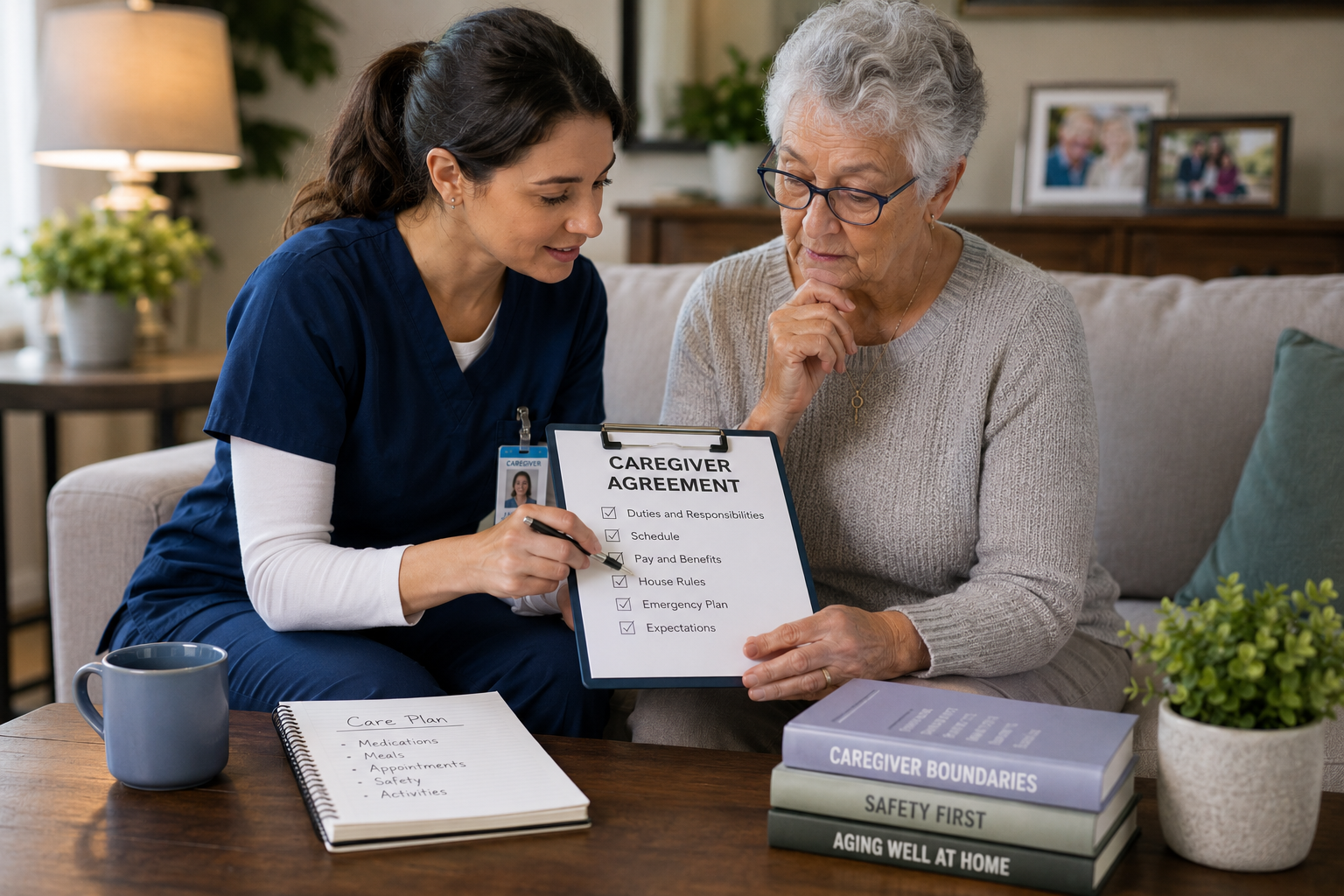
A written agreement is essential. It should include:
Work schedule
Hourly rate
Payment method
Duties and limits
Meal preparation expectations
Bathing and toileting responsibilities
Medication reminder policy
Transportation rules
Phone use rules
Documentation expectations
Emergency procedures
Confidentiality expectations
Termination policy
Backup plan if the caregiver is unavailable
Families should also create a daily care log. This may include meals, fluids, toileting, medications reminded, mood, activity, falls, symptoms, and concerns.
The Backup Problem
One of the biggest practical problems with private care is lack of backup.
If the caregiver becomes sick, has car trouble, goes on vacation, quits suddenly, or has a family emergency, who will care for your loved one?
If your parent cannot safely be alone, the answer cannot be “we will figure it out.” Families need a real Plan B.
Ask yourself:
Who comes if the caregiver cancels at 6 a.m.?
Can family leave work immediately?
Is there a second caregiver available?
Is there an agency that can provide backup?
Is the loved one safe alone for any period of time?
Without backup, the family remains the emergency care system.
When a Private Caregiver May Be Appropriate
A private caregiver may be appropriate when:
The senior is medically stable
Needs are mostly companionship or personal care
The family can supervise closely
There is a clear written agreement
Background checks and references are completed
Payroll and tax responsibilities are handled properly
There is insurance protection
There is a backup plan
The loved one does not require skilled nursing oversight
Private caregiving can work, but only when the family manages it carefully and legally.
When an Agency May Be Safer
An agency may be a better choice when:
The loved one has dementia
There is fall risk
The senior recently left the hospital
Medication issues are present
There are wounds or skin concerns
The family needs backup staffing
The family cannot supervise closely
The care schedule is complex
The senior needs help with transfers or mobility
The family wants liability, payroll, and oversight handled professionally
The agency route may cost more per hour, but that cost often includes structure, supervision, backup, and risk management.
A Nurse’s Perspective: Do Not Confuse Help With Safety
A caregiver’s presence in the home does not automatically mean the home is safe. The caregiver must be trained, reliable, supervised, and able to recognize when something is wrong.
Families should ask:
Is this person simply present, or is there a real care plan?
Good care requires observation, communication, documentation, and follow-through.
A Psychology Perspective: Protect the Family Relationship
Many adult children hire caregivers because they are exhausted. That is understandable. But without boundaries and planning, the caregiver arrangement can create new stress.
A well-managed caregiver relationship can help adult children return to being sons and daughters instead of full-time crisis managers. But an unmanaged caregiver arrangement can create anxiety, guilt, mistrust, and family conflict.
The goal is not just to find “someone nice.” The goal is to create a safe, sustainable care structure.
Private Caregiver Hiring Checklist
Before hiring privately, families should complete this checklist:
Run a criminal background check
Check references
Verify identity and driver’s license
Review tax responsibilities
Speak with a payroll service or tax professional
Call homeowner’s insurance about caregiver injury coverage
Create a written care agreement
Create a written care plan
Set clear boundaries
Establish a backup caregiver plan
Keep a daily care log
Monitor the senior’s condition regularly
Reassess whether care needs are increasing
Final Thoughts
Hiring a private caregiver can seem simple, affordable, and personal. But families must understand the responsibilities that come with it. You may become the employer, scheduler, supervisor, payroll manager, risk manager, and backup caregiver.
For some families, private care works well. For others, an agency provides a safer and more dependable structure.
The right choice depends on your loved one’s medical needs, safety risks, family availability, financial situation, and comfort with managing the responsibilities of private employment.
Before hiring anyone, slow down and ask the hard questions. Your loved one deserves compassionate care, but they also deserve safe, supervised, and reliable care. And your family deserves peace of mind.